
Mid Century Dining Room
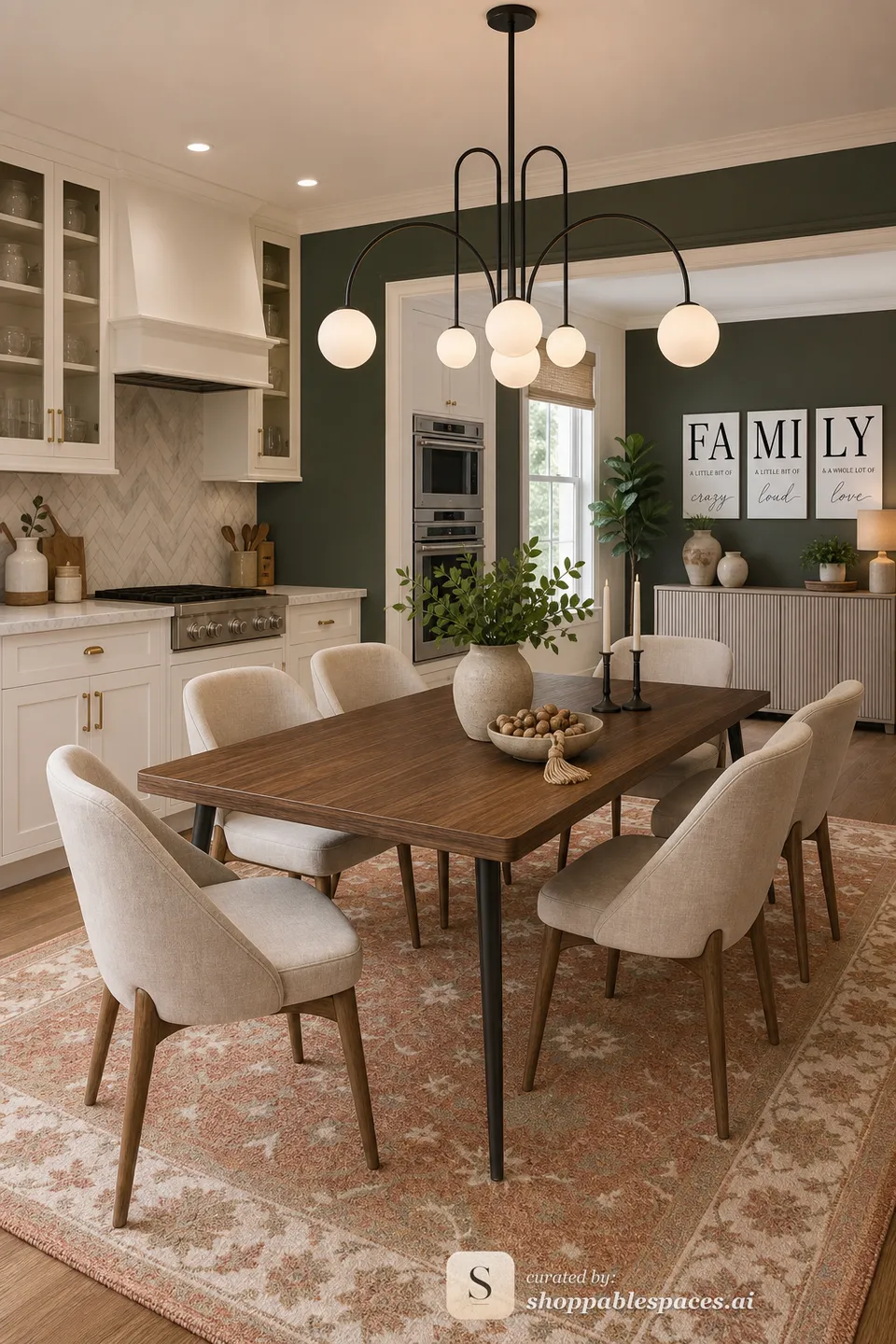
Creating a sophisticated mid century dining room does not require a luxury budget, as this space demonstrates how clever material choices and smart layering define an elevated aesthetic.
Shop the look
Explore the collection of furniture and accessories used to create this warm and inviting mid century dining room design. Prioritize a solid wood dining table as your primary investment piece to ensure long-term durability and style.
Shop this dining room
 1Dining Chair - Beige, Linen, Mid-Century
 2Dining Table - Walnut, Wood, Rectangular, Metal Legs
 3Area Rug - Rust & Ivory, Handmade Wool, Traditional Floral
 4Wall Art - Black & White, Canvas, Inspirational Typography
 5Faux Fiddle Leaf Fig - Green, Plastic, Floor Plant
 6Chandelier - Black, Metal, Glass, Mid-Century, Globe
 7Sideboard - Grey, Wood, Fluted Doors, 4-Door
 8Vase - Beige, Ceramic, Rustic, Textured
 9Console Table - Rustic Brown, Wood, Farmhouse
 10Roman Shades - Beige, Woven, Cordless, Linen
Design Notes
Mid Century Dining Room: Achieving High Style on a Budget
Creating a sophisticated mid century dining room does not require a luxury budget, as this space demonstrates how clever material choices and smart layering define an elevated aesthetic.
This dining room captures the essence of mid century design by balancing warm wood tones with soft, neutral textures. The centerpiece is a rich walnut table paired with clean-lined beige linen chairs, creating a comfortable yet structured foundation. A traditional floral rug in rust and ivory anchors the space, adding a layer of historical pattern that grounds the modern furniture. Overhead, a black globe chandelier provides a striking graphic focal point, while the fluted sideboard adds architectural interest to the wall. By mixing organic elements like the ceramic vase and faux fiddle leaf fig with contemporary art, the room achieves a curated, collected feel that looks far more expensive than its individual components.
The Art of Layered Neutrals
The secret to this room’s success lies in its disciplined color palette. By sticking to a base of warm beiges, soft whites, and deep walnut, the design avoids feeling cluttered. The linen chairs provide a tactile softness that contrasts beautifully with the sleek wood of the dining table. To replicate this, focus on selecting pieces that share a similar undertone. The beige roman shades pull the window treatment into the cohesive scheme, ensuring the light remains diffused and soft. When you keep the primary furniture neutral, you gain the freedom to introduce subtle patterns in the rug or decorative accents without overwhelming the visual flow of the dining space.
Graphic Elements and Lighting
Lighting serves as the jewelry of any room, and this black globe chandelier acts as the perfect modern anchor. Its geometric form provides a sharp contrast to the organic curves of the ceramic vase and the soft edges of the linen seating. Similarly, the black and white typographic wall art introduces a necessary graphic punch that prevents the neutral room from feeling stagnant. When shopping for these pieces, prioritize silhouettes that feel intentional. A bold light fixture and well-placed art can elevate even the most basic furniture, making your dining room feel like a custom-designed space rather than a collection of individual items.
Styling for a Polished Finish
Final touches are what turn a functional dining area into a welcoming home environment. The fluted sideboard offers hidden storage while providing a surface for curated decor, such as the rustic ceramic vase. Adding a faux fiddle leaf fig introduces a touch of organic life, which is essential for softening the harder lines of the sideboard and console table. These small styling choices are budget-friendly ways to inject personality into your space. By carefully arranging your tabletop accessories and ensuring your rug is properly centered, you create a sense of order and intentionality that makes the entire room feel complete and professionally styled.
Room Design FAQ
How do I mix wood tones in a dining room?
The key is to ensure the wood tones share a similar warmth level. Pairing a walnut table with a slightly different wood-toned console works because they both lean into earthy, rich hues. Avoid mixing very cool, grey-toned woods with warm, red-toned woods to keep the room feeling harmonious.
Can I use a traditional rug in a modern room?
Absolutely. A traditional rug with a faded, vintage-inspired pattern adds necessary character and depth to a modern or mid century space. It prevents the room from feeling too clinical or sterile by introducing a layer of history and intricate texture that balances the clean lines of the furniture.
How do I make a budget dining room look custom?
Focus on scale and lighting. A large, well-placed chandelier and oversized wall art make a room feel intentional and expensive. Keep your furniture simple, and spend your budget on one or two statement pieces that draw the eye, then fill in the gaps with affordable, neutral basics.
Paid links: we may earn a commission when you buy through product links. Prices and availability are illustrative and may differ on the retailer site.