
Transitional Living Kitchen Dining
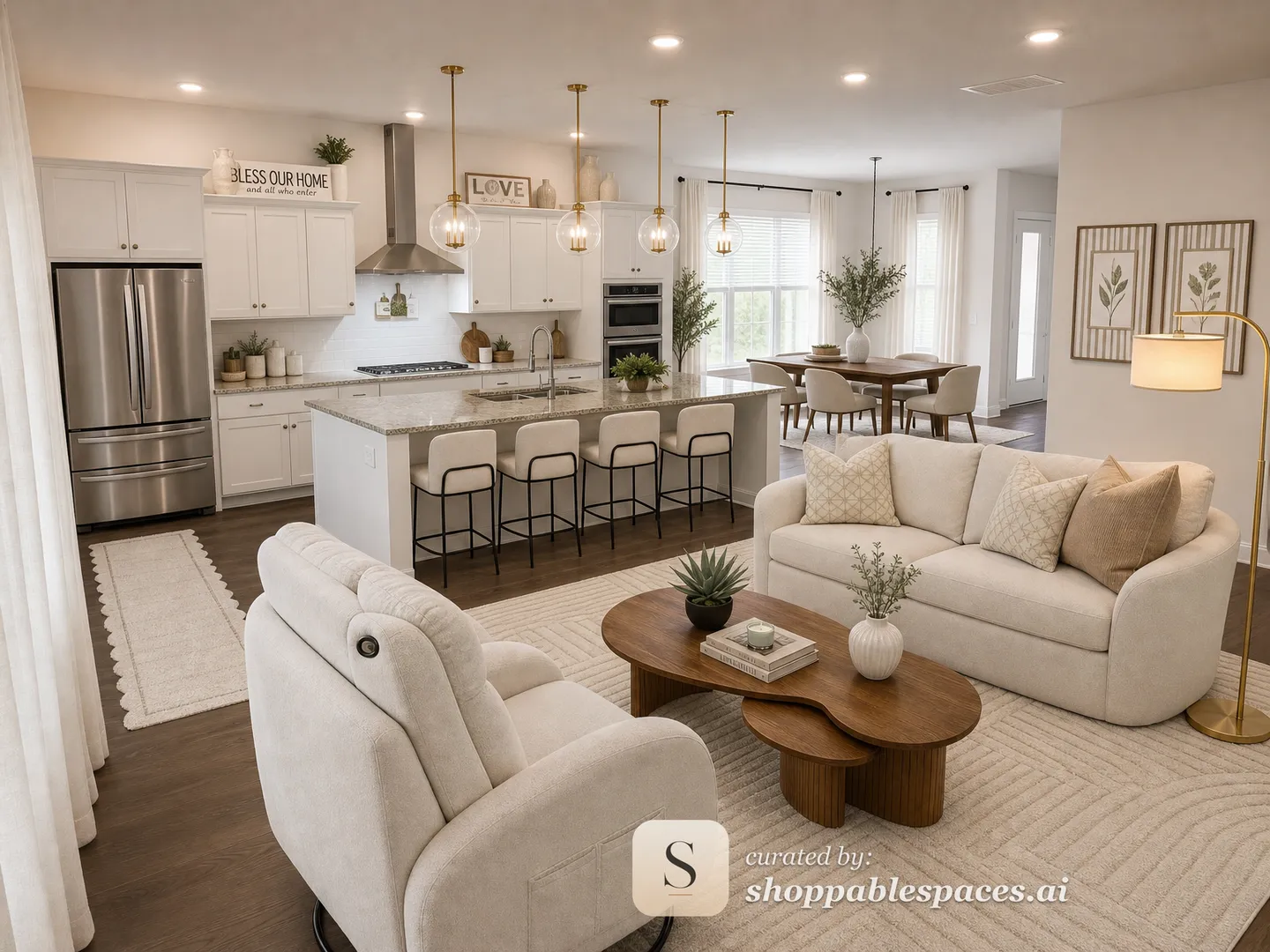
By layering high-low textures against warm wood tones, this open-concept home achieves a sophisticated balance between modern farmhouse comfort and the clean, functional lines of contemporary transitional design.
Shop the look
Ready to bring this balanced, textural look into your own home? Explore the curated selection of furniture and decor pieces featured in this design. Select high-low textured rugs to add visual interest to neutral zones without overwhelming the color palette.
Shop this living kitchen dining
 1Curtains - Cream, Linen, Semi-Sheer, Modern Farmhouse
 2Vase Set - White, Ceramic, Textured
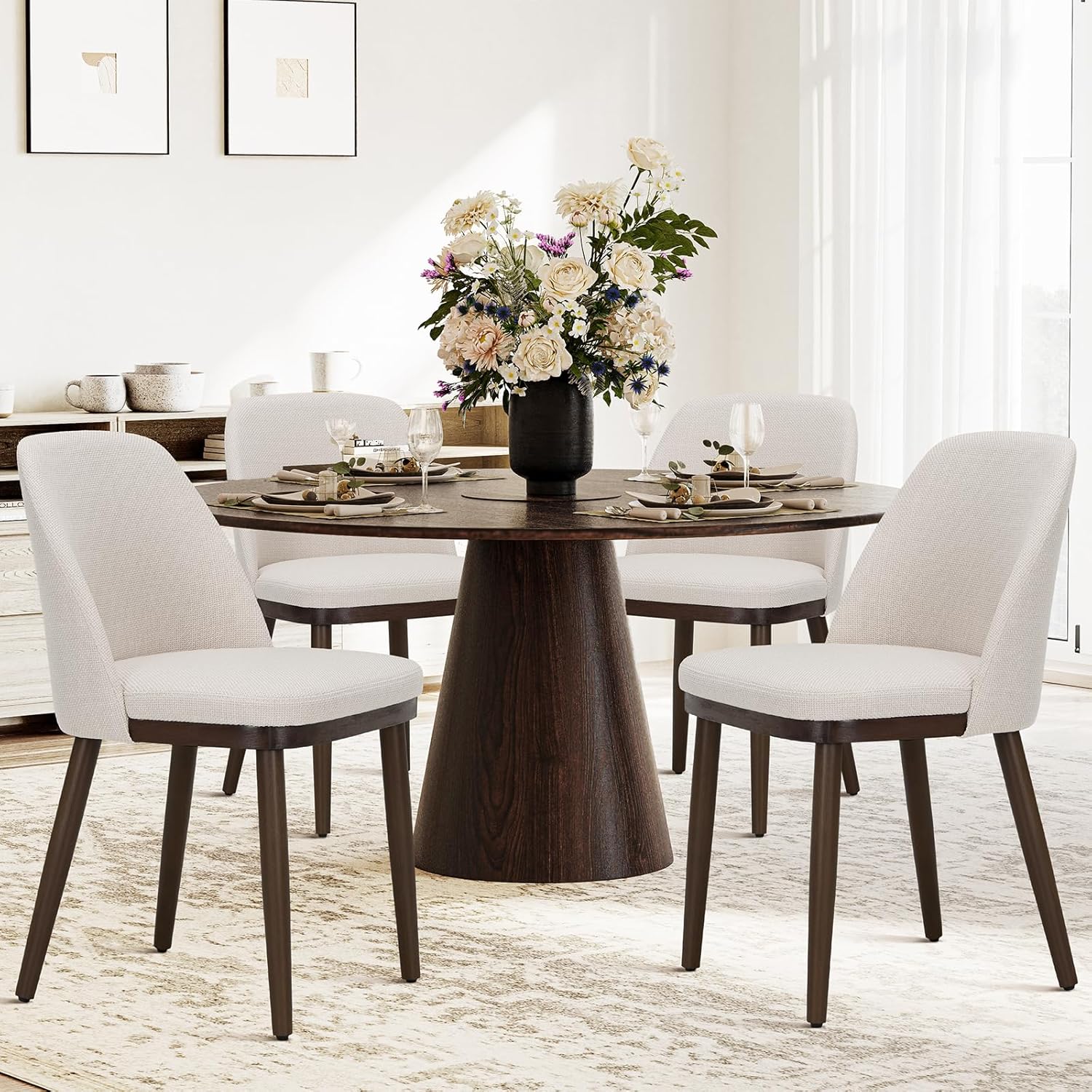 3Dining Chair - Beige, Fabric, Wood Legs, Curved Back
 4Dining Table - Teak, Wood, Metal, Industrial
 5Faux Plant - Green, Plastic, Agave, Black Pot
 6Floor Lamp - Gold, Metal, Arc, Beige Shade
 7Area Rug - Beige, Plush, High-Low Texture
 8Runner - Beige, Scalloped Border, Washable
 9Wall Art - Sage Green, Cream, Canvas, Botanical Floral
 10Counter Stool - Cream, Linen, Metal Frame
 11Sofa Set - Cream, Fabric, Sloped Arms, Curved
 12Recliner - Cream, Chenille, Swivel, Rocking
 13Coffee Table - Walnut, Wood, Mid-Century, Nesting
 14Throw Pillow - Beige, Textured, Modern Farmhouse
 15Pendant Light - Gold, Glass, Globe, Mid-Century
Design Notes
The Tactile Harmony of Transitional Living
By layering high-low textures against warm wood tones, this open-concept home achieves a sophisticated balance between modern farmhouse comfort and the clean, functional lines of contemporary transitional design.
This expansive living, kitchen, and dining area demonstrates how a cohesive material palette creates a seamless flow throughout an open floor plan. The space is anchored by a neutral foundation, where cream linen upholstery and plush, high-low area rugs provide a soft, tactile contrast to the structured walnut coffee table and industrial teak dining set. Subtle touches like the gold arc floor lamp and matte black stool frames add metallic definition, while natural elements such as ceramic vases and botanical wall art bring the outdoors in. By focusing on the interplay between smooth surfaces and woven textiles, this home achieves a sense of intentionality that feels both polished and deeply inviting for daily life.
Layering Textures for Depth
Texture is the primary tool for elevating a neutral room. In this space, the designer avoids a flat look by mixing materials with varying tactile qualities. The plush, high-low area rug beneath the sofa set provides a soft foundation, while the linen upholstery on the counter stools and recliner adds a subtle, organic weave. These soft surfaces are balanced by the solid walnut of the nesting coffee table and the industrial wood grain of the dining table. By juxtaposing these elements, the room gains a three-dimensional quality that feels curated rather than staged, proving that monochromatic palettes can be visually rich when the right mix of materials is chosen.
Defining the Open Floor Plan
Designing for an open floor plan requires a delicate balance between unity and distinction. Here, the transition from the kitchen island to the living area is managed through consistent color choices, such as the cream linens and warm wood tones that appear in every zone. The dining area is clearly defined by its own rug and industrial teak table, yet it remains visually connected to the kitchen through the shared use of metallic accents and greenery. This approach ensures that the entire space feels like a single, harmonious environment while still allowing each zone to serve its specific purpose, from casual morning coffee to formal evening dining.
The Art of Transitional Styling
Transitional design thrives on the marriage of traditional comfort and modern simplicity. This room captures that essence by pairing sloped-arm sofas with contemporary nesting tables and botanical canvas art. The choice of a scalloped-border runner adds a touch of classic charm, while the sleek gold arc lamp and modern ceramic vases introduce a cleaner, more current aesthetic. By blending these styles, the home avoids feeling tied to a single era. Instead, it creates a timeless atmosphere where classic silhouettes are updated with fresh, modern materials, resulting in a versatile space that adapts perfectly to the evolving needs of a contemporary household.
Room Design FAQ
How do I keep a neutral room from feeling cold?
The secret is to prioritize tactile materials. Incorporate linen, chenille, and high-low rugs to add warmth. Pair these soft textiles with rich, dark wood tones like walnut or teak to ground the space and prevent the cream-heavy palette from feeling sterile or one-dimensional.
What is the best way to link a kitchen and living area?
Use a consistent color story and repeating materials across both zones. For example, carry the same wood tone from your dining table to your coffee table, and match your metal finishes on lighting and seating. This creates a visual rhythm that makes the entire floor plan feel intentionally connected.
Can I mix industrial and farmhouse styles?
Absolutely. Transitional design is all about this blend. You can pair industrial elements, like metal-framed stools or wood-and-metal tables, with farmhouse staples like linen curtains and botanical art. The key is to keep the silhouettes clean and avoid overly ornate pieces, allowing the materials to speak for themselves.
Paid links: we may earn a commission when you buy through product links. Prices and availability are illustrative and may differ on the retailer site.